
Blog
Common UTV Terms Explained (Without the Confusion)
Oct
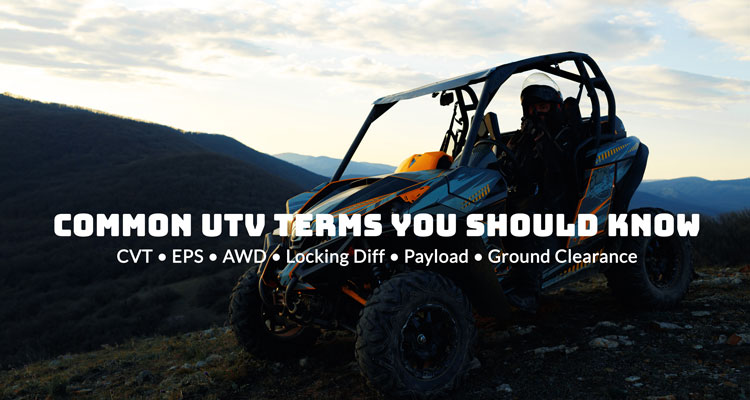
If you’re new to UTVs, or even if you’ve been riding for a while, you’ve probably heard conversations that sound like a different language. CVT. SxS. EPS. Locking diffs. It’s easy to nod along and hope no one quizzes you later. Good news: UTV terminology doesn’t have to be intimidating. Once you understand the basics, everything from buying accessories to talking trail strategy makes a whole lot more sense. Let’s break down the most common UTV terms in plain English, without the confusion.
UTV (Utility Task Vehicle)
A UTV, also called a side-by-side, is an off-road vehicle designed for both work and recreation. Unlike ATVs, UTVs feature side-by-side seating, a steering wheel, foot pedals, and usually a roll cage. Many include cargo beds, making them equally useful on the trail or around the property.
Side-by-Side (SxS)
Side-by-side simply describes the seating layout. The driver and passenger sit next to each other instead of straddling the machine like on an ATV. Most modern UTVs fall into this category, so you’ll often hear UTV and SxS used interchangeably.
CVT (Continuously Variable Transmission)
A CVT is the most common transmission found in UTVs. Instead of traditional gears, it uses a belt-and-pulley system to smoothly adjust power delivery. CVTs make riding easier because you don’t have to shift manually. You just hit the gas and go.
Many UTVs also include a CVT clutch system designed to handle different riding conditions like mud, snow, and towing.
2WD / 4WD / AWD
These terms describe how power reaches the wheels.
- 2WD (Two-Wheel Drive): Power goes to two wheels, usually the rear. This mode works well for dry trails and light-duty riding.
- 4WD (Four-Wheel Drive): Power goes to all four wheels when engaged. Riders use this for mud, snow, steep climbs, and technical terrain.
- AWD (All-Wheel Drive): The system automatically sends power where it’s needed without manual engagement.
Knowing when to switch modes improves traction and reduces unnecessary wear.
Differential (Diff)
A differential allows wheels to rotate at different speeds while turning. Many UTVs feature locking or limited-slip differentials.
- Open Differential: Wheels spin independently, which works fine on flat ground.
- Locking Differential: Forces both wheels to spin together, improving traction in slippery conditions.
Locking the differential helps when one wheel loses grip in mud, snow, or uneven terrain.
EPS (Electronic Power Steering)
EPS reduces steering effort by assisting your input electronically. It makes tight trails, rocky terrain, and long rides far more comfortable. Riders especially appreciate EPS when navigating obstacles or driving all day for work.
Once you try EPS, it’s hard to go back.
Ground Clearance
Ground clearance measures the distance between the lowest part of the UTV and the ground. More clearance helps you avoid scraping over rocks, logs, and ruts. Riders who tackle rough terrain or deep snow often prioritize higher ground clearance.
Wheelbase
Wheelbase refers to the distance between the front and rear wheels. A longer wheelbase improves stability at speed and on climbs, while a shorter wheelbase enhances maneuverability on tight trails.
Payload vs. Towing Capacity
These two numbers often get mixed up.
- Payload Capacity: How much weight the UTV can carry, including passengers, cargo, and accessories.
- Towing Capacity: How much weight the UTV can pull behind it.
Exceeding either can affect performance and safety, so always know your limits.
Roll Cage / ROPS
ROPS stands for Roll-Over Protection Structure. It’s the frame designed to protect occupants in the event of a rollover. Helmets, seat belts, and a properly maintained roll cage all work together to keep riders safe.
Accessories
Accessories enhance comfort, safety, and functionality. Common UTV accessories include windshields, roofs, doors, mirrors, heaters, and winches. A windshield, especially a polycarbonate one, improves visibility and comfort in every season.
UTV terms may sound technical, but they’re easy to understand once you break them down. Knowing the language helps you make better buying decisions, ride smarter, and communicate clearly with other riders.
Whether you’re shopping for your first UTV, upgrading accessories, or just want to sound like you know what you’re talking about on the trail, understanding these basic UTV terms puts you ahead of the curve. Less confusion, more confidence, and more time enjoying the ride.
